What Should I Do Before Running Meta Ads for My Business?
Meta Ads can be incredibly useful for getting your business in front of more of the right people.
But ads don't operate in a vacuum.
You can have strong creative, good targeting and a healthy budget, then lose the opportunity because someone clicks through and doesn't understand what you do. Or because your tracking isn't set up. Or because a lead comes in on Friday and nobody follows up until Tuesday.
Before putting more money behind your marketing, we'd make sure the rest of the customer journey is ready to receive the attention you're paying for.
Paid and organic social aren't opposing strategies either. They do different jobs, which is why it's useful to understand how organic and paid social can work together before treating ads as the solution to everything.
Can People Immediately Understand What My Business Does?
Imagine someone sees your ad for the first time. They don't know your founder story, they haven't been following you for six months, and they don't have the context your existing customers do.
What happens when they click?
Your landing page, Instagram profile or website should make the business easy to understand quickly. Your bio, pinned posts, Highlights, offer and call to action should all reinforce what the ad promised.
Marketers sometimes call this message match: the ad, destination and next step should feel like one continuous conversation rather than three different campaigns stitched together.
Is My Offer Actually Ready to Advertise?
Ads amplify visibility. They don't automatically fix an offer people don't understand or want.
Before launching, get clear on what you're asking someone to do and why they should care. What's the benefit? Who is it for? Why now? What makes the offer relevant or different?
If you can't explain the offer simply without the ad, spending more money to show it to more people probably isn't the first problem to solve.
Will People Trust My Business When They Look Me Up?
This is one of the biggest gaps we see between paid and organic.
Someone sees your ad. Then they search your name. They open your Instagram. They watch a few Reels. They check your reviews. Maybe they Google you. Only then do they decide whether to enquire.
That's why organic social media still matters even when you're paying for reach. It can become the trust layer someone uses to validate the promise they first saw in your ad.
Your ad creative might earn the click. The rest of your presence helps someone decide whether that click becomes a conversation.
Should I Research My Competitors' Meta Ads Before Running My Own?
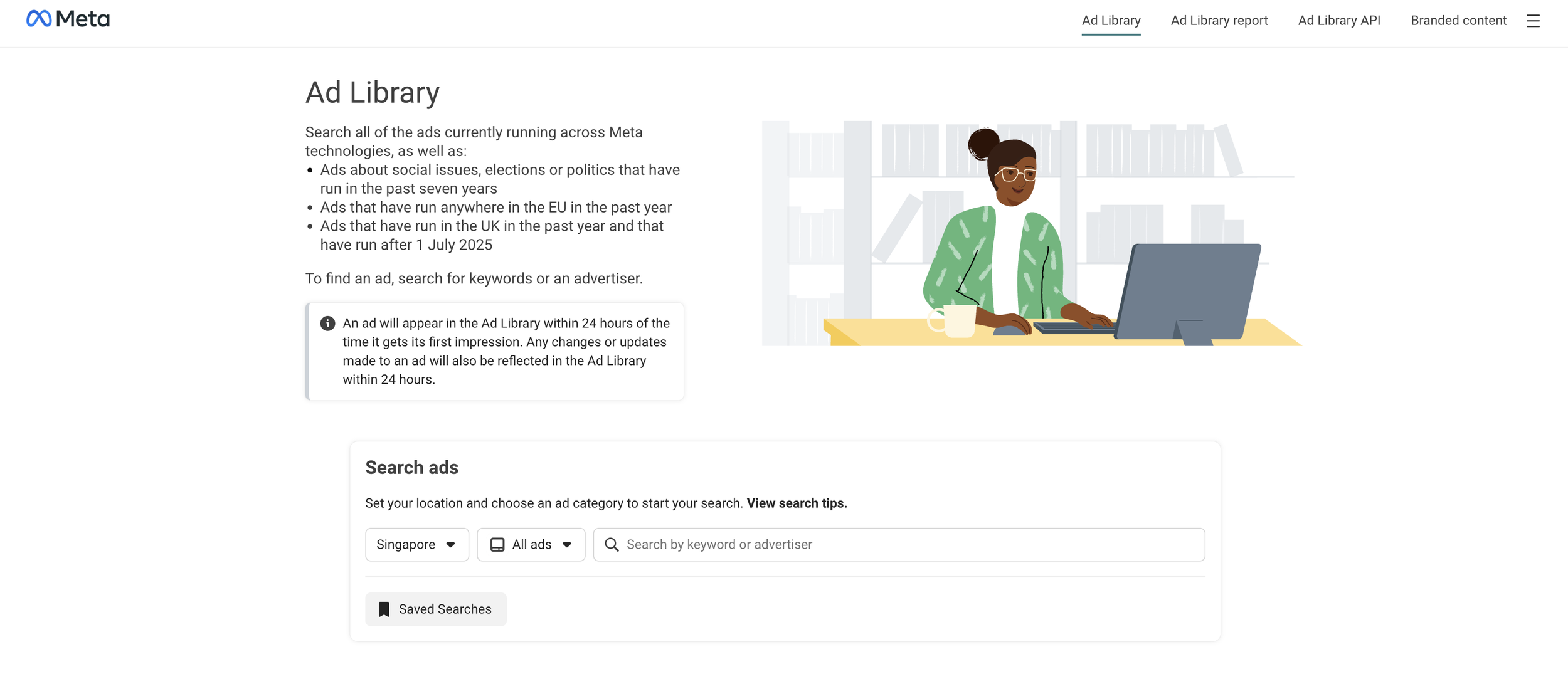
Yes, but not so you can copy them.
Meta's Ad Library lets you view active ads run by other businesses. Use it to understand the environment your audience is already seeing: common offers, hooks, creative styles, calls to action and whether the category is leaning heavily towards polished production, testimonials, founder-led videos or lo-fi content.
What it won't tell you is whether those ads are profitable, how much they're spending or exactly who they're targeting. Seeing several versions of an ad running can give you context, but it isn't proof that the campaign is working.
Competitive research shouldn't tell you what to copy. It should help you understand how to be different.
What Tracking Should I Set Up Before Running Meta Ads?
If you're sending people to your website, make sure the Meta Pixel is installed correctly and that you're tracking the events that matter to the campaign, such as leads, bookings, add-to-cart actions or purchases.
Where appropriate, businesses may also use Meta's Conversions API alongside the Pixel to strengthen the data being sent back to Meta. UTM parameters are useful too because they help you identify campaign traffic in your website analytics.
If you haven't even configured the underlying business and ad account yet, start with our Facebook Ads Manager setup guide before jumping into campaign creation.
You don't need to become a tracking engineer. You do need enough measurement in place to understand what happened after someone saw or clicked the ad.
What Should Happen After Someone Submits a Meta Lead Form?
Getting the lead isn't the end of the campaign. It's the beginning of the next part of your customer journey.
Before the ads go live, know where that lead is going. Does it enter a CRM? Does your team get notified? Does the person receive an immediate email or WhatsApp acknowledgement? Who follows up, and how quickly? What happens if they don't respond the first time?
This matters particularly with Instant Forms because reducing friction can increase lead volume, but not every lead will be equally qualified.
For example, 50 leads at $20 each means you've spent $1,000. If only 10 are genuinely qualified, your effective cost per qualified lead is $100. If two become customers, your media cost to acquire each customer is $500 before any other sales or operating costs.
That doesn't make the campaign good or bad on its own. It simply shows why the number Meta displays isn't the whole story.
How Do I Know if My Meta Ads Are Actually Working?
Define success before you spend.
For awareness, you might care about reach, frequency and video engagement. For traffic, landing page views and cost per landing page view become more useful. For lead generation, we'd look beyond the lowest cost per lead to focus on qualified leads, customer acquisition cost, and actual sales outcomes.
The same principle applies to organic content: attention and conversion are not the same thing. A cheap click or lead only matters if it's helping the business move towards the outcome you actually care about.
Attribution is never perfect, so combine what Meta reports with your website analytics, CRM, and what your sales team is actually hearing. Cheap leads aren't the goal. Profitable customers are.
How Often Should I Check and Optimise My Meta Ads?
Don't set them and forget them, but don't panic-edit them every morning either.
Watch what is happening across CPM, click-through rate, cost per click, landing page views, cost per lead, conversion rate and, most importantly, lead quality or sales outcomes.
Creative fatigue and frequency can also tell you when an audience has seen the same message too many times.
What we'd avoid is changing the audience on Monday, the creative on Tuesday, and the budget on Wednesday, then wondering which change caused the result. Give campaigns enough time and data to learn something, then make deliberate changes.
Paid social works best as an ongoing cycle of testing, learning and refining.
Are Meta Ads Only One Part of My Marketing Funnel?
Yes, and that's the point we'd come back to before spending.
The creative earns attention. Targeting helps you reach the right people. Your organic presence builds trust. The landing page communicates the offer. Tracking tells you what happened. Your follow-up process turns an enquiry into a conversation. Ongoing optimisation helps you learn what is actually driving results.
Before you launch, ask yourself: If 1,000 of the right people discovered my business tomorrow, is the rest of my customer journey actually ready for them?
Thinking About Running Meta Ads?
At FTLOS, we look at the bigger picture before putting budget behind a campaign because sending more traffic into a broken journey rarely fixes the journey.
If you're considering Meta Ads and aren't sure whether your offer, content, tracking or follow-up is ready, get in touch. We can help you work out what needs to be in place before you start spending.
